

I stopped reporting rankings as a primary metric three years ago. Not because they don't matter, but because they answer the wrong question.
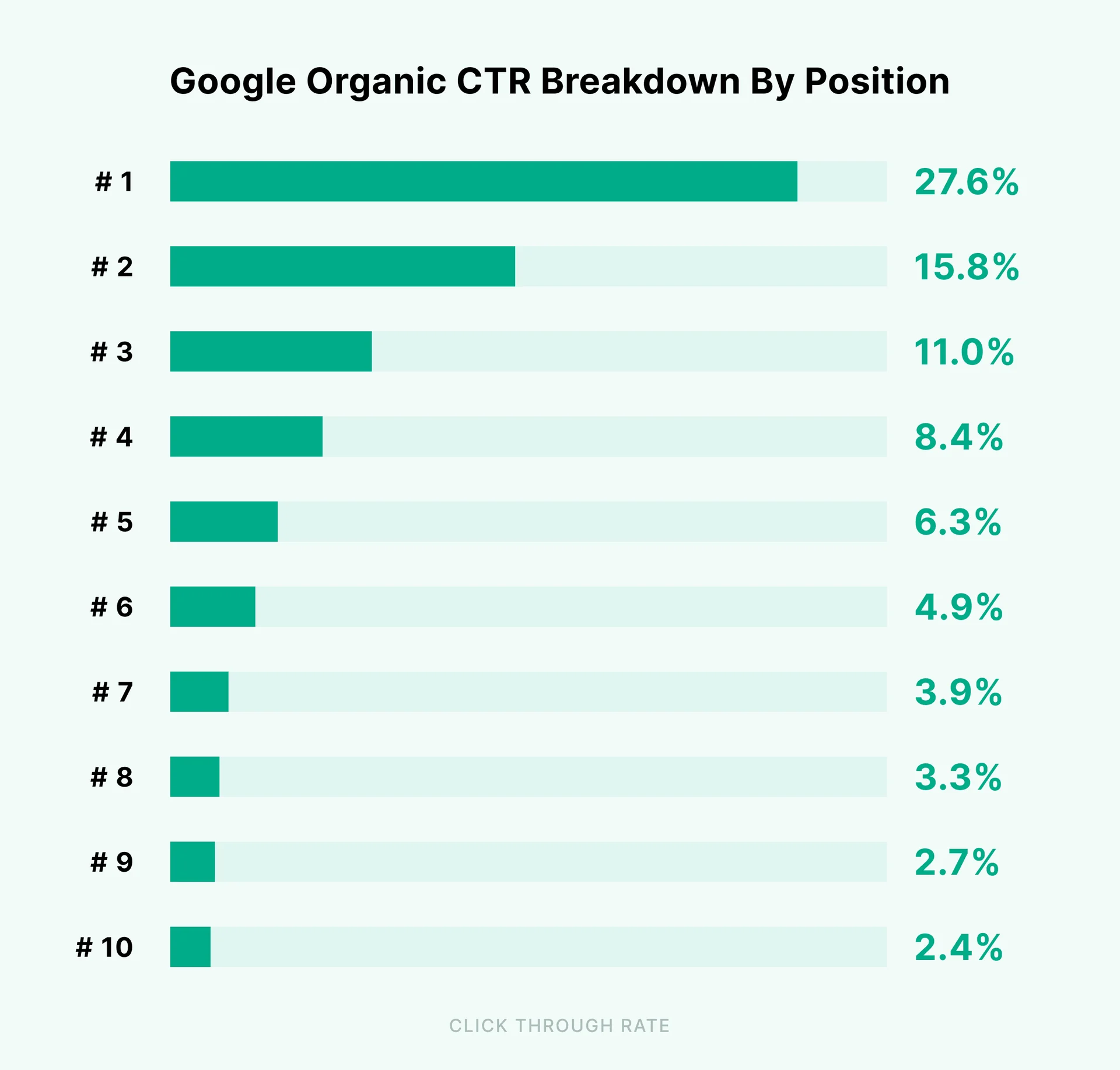
The Problem with Rankings
"Position 3 for 'enterprise SEO'" tells you where you appear. It doesn't tell you:
- How many people actually see that position (impressions vary by query)
- Whether the click-through rate justifies the effort
- What happens when AI answers absorb the clicks above you
Rankings are a means to an end. The end is visibility that drives business outcomes.
Share of Voice as the Metric
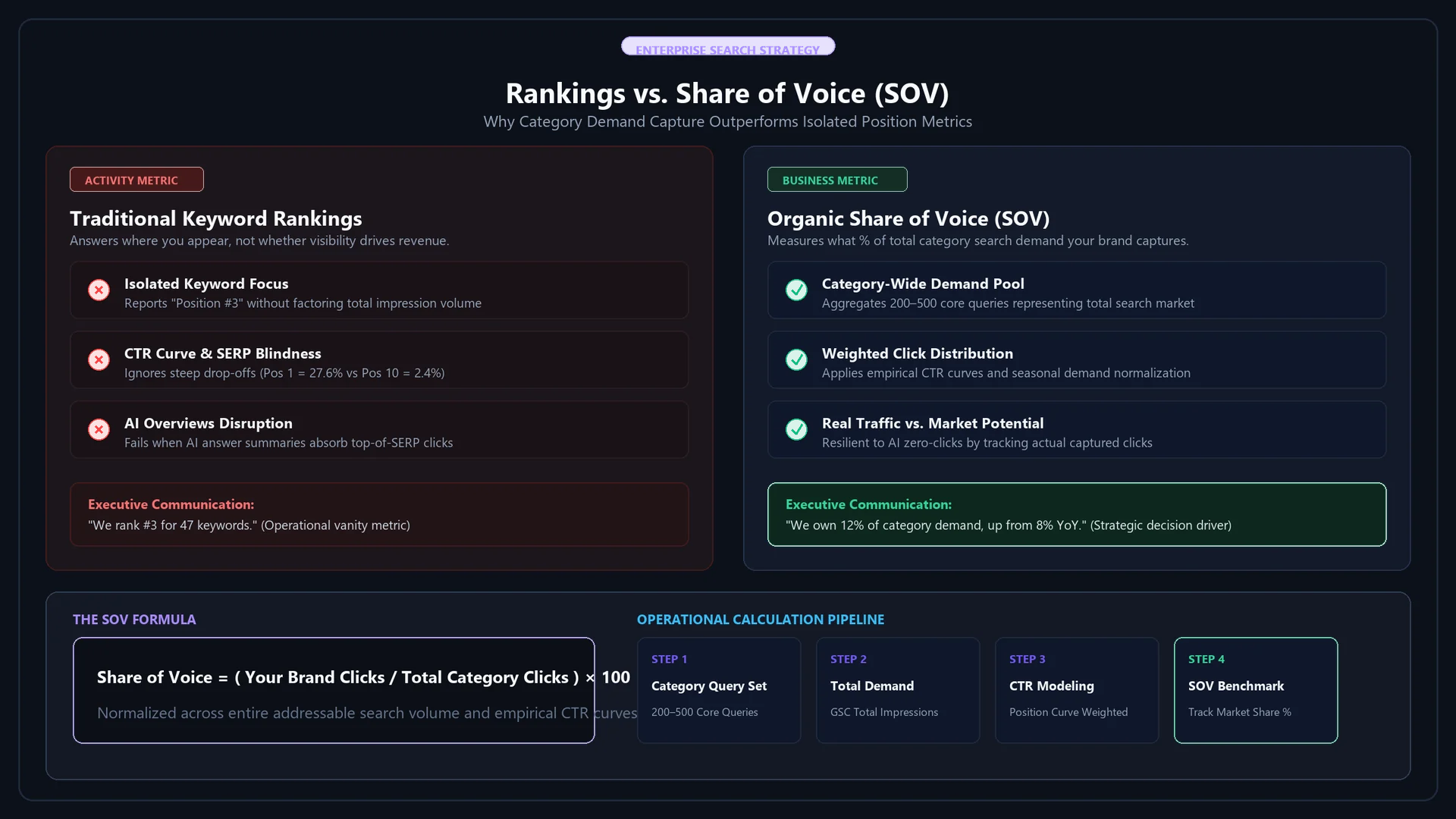
Share of voice measures what percentage of total search demand in your category your brand captures. It's calculated as:
Your clicks / Total category clicks × 100This accounts for:
- All queries in your category, not just your target keywords
- Position CTR variations
- AI answer impact (queries where no click occurs)
- Seasonal demand fluctuations
How I Calculate It
- Define your category query set (typically 200-500 core queries)
- Pull total impressions for that set from Search Console
- Estimate category CTR curves by position
- Calculate your clicks vs. estimated total category clicks
The result is a single number that tracks over time. Up means you're winning. Down means competitors are taking share.
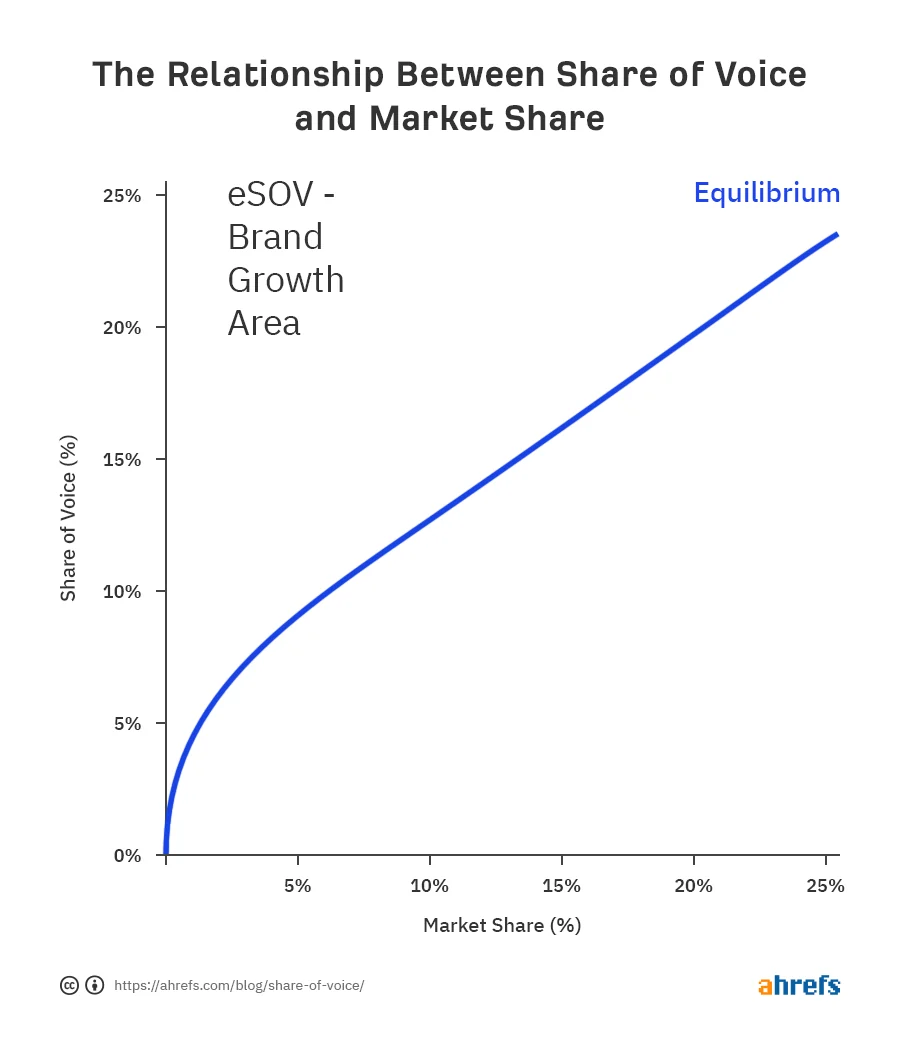
The Executive Advantage
Boards understand share of voice. "We own 12% of search demand in our category, up from 8% last year" is a business metric. "We rank #3 for 47 keywords" is an activity metric.
One drives decisions. The other drives reports.