

In the AI-first ecosystem, page speed is no longer a UX enhancement or a tiebreaker. It is a binary eligibility requirement. Large Language Models operate under strict processing budgets. They cannot wait for slow servers, render heavy JavaScript, or parse bloated DOM structures within real-time RAG pipelines.
Empirical Research: Structural Clarity Drives Citation
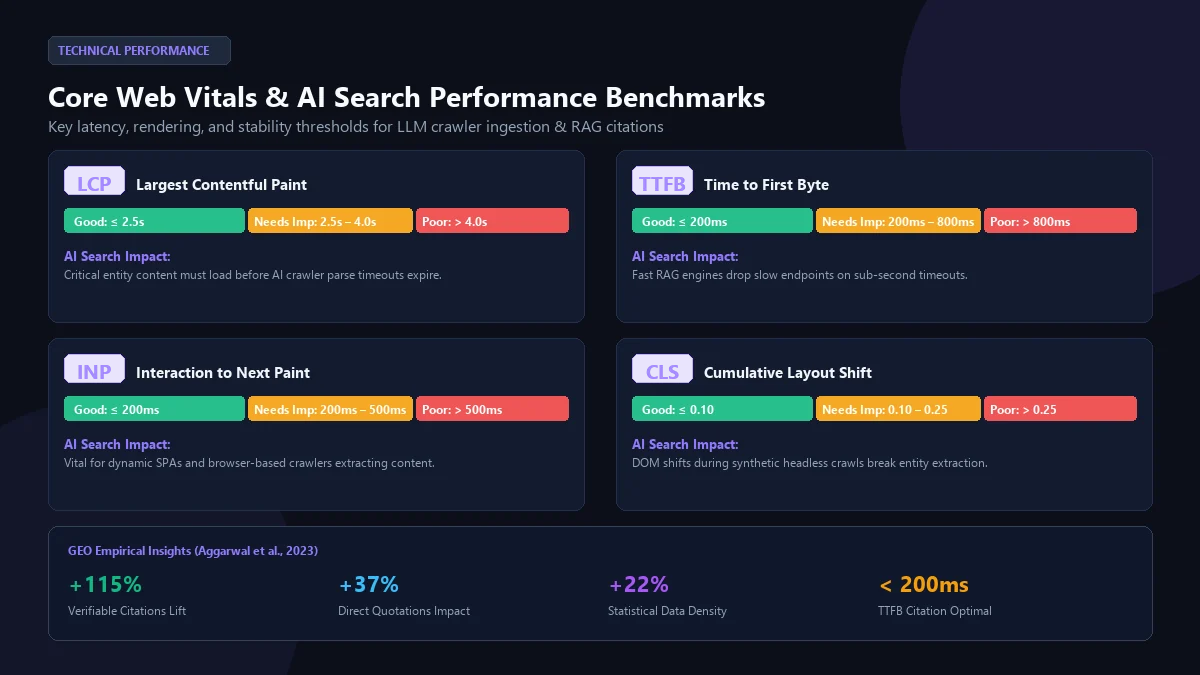
The landmark paper 'GEO: Generative Engine Optimisation' (Aggarwal et al., 2023) formalised AI citation analysis across 10,000 queries. Findings showed that structural clarity, not traditional ranking alone, determined AI visibility.
- Adding verifiable citations → +115% visibility (for mid-ranking pages)
- Adding statistics → +22%
- Adding quotations → +37%
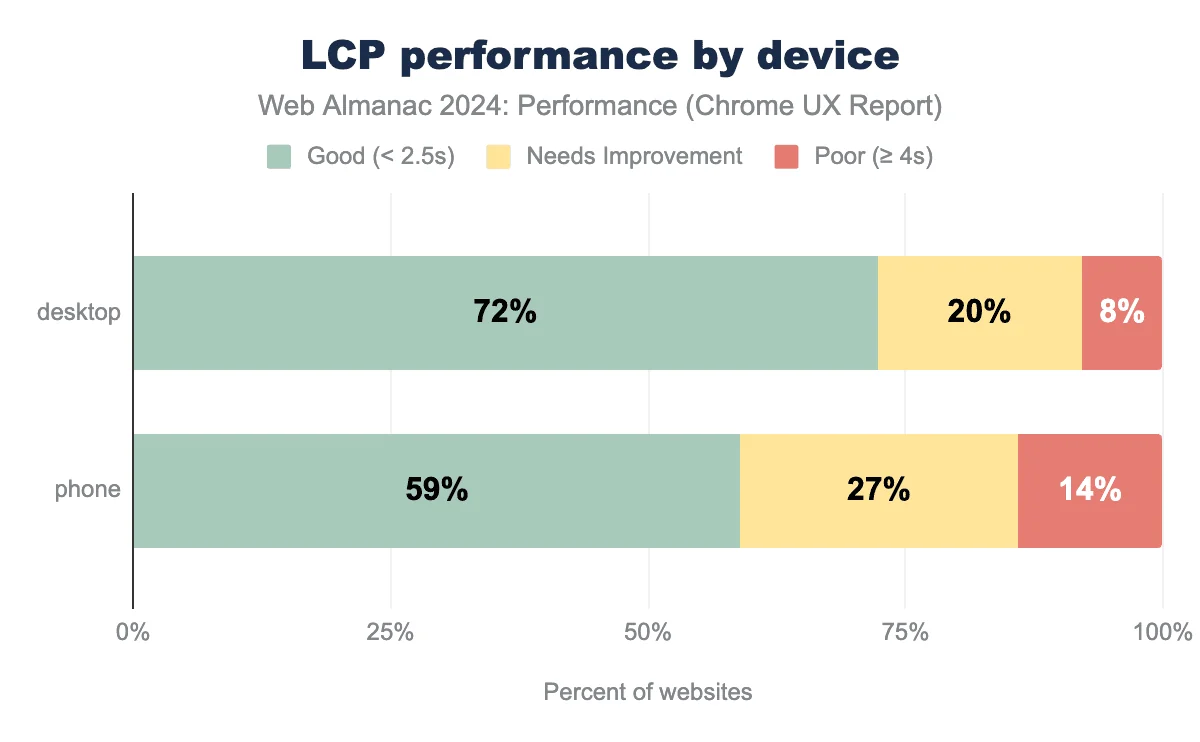
Page speed benchmarks reinforce this: 53% of users leave after 3 seconds, bounce probability increases 90% at 5 seconds, and conversion rates rise dramatically under 1 second. Pages with LCP under 2.5s and TTFB under 200ms dominate both traditional engagement metrics and AI citation frequency.
Freshness & Citation
- The majority of cited pages were updated within 30 days
- Citation rates decay rapidly for static content
- Technical documentation can lose visibility within months
AI Engine Behaviour Comparison
Google AI Overviews ingest content very fast with high citation volatility, requiring strong Core Web Vitals and entity clarity. ChatGPT Search is slower to ingest but highly stable once cited, relying on robots permissions and timeout compliance. Perplexity AI operates in real-time with moderate stability, demanding extreme speed and structured data.
Technical Imperatives for AI-First SEO
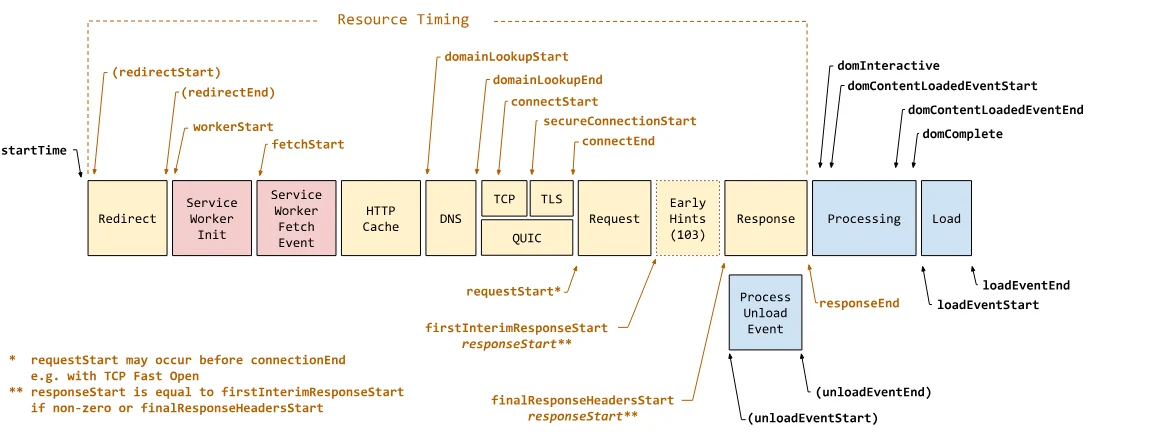
Compress Time to First Byte (TTFB)
- Use premium cloud hosting
- Eliminate render-blocking resources in the critical path
Monitor AI Citation Share
- Share of Model
- Citation frequency
- Mention accuracy
- Recrawl velocity
The result: higher citation frequency, stable AI visibility, controlled brand narrative, and increased conversion opportunity.