

Every technical SEO audit hits the same wall: the roadmap is sound, but the engineering queue is six sprints deep. Strategy without execution is just documentation.
The implementation toolkit has expanded from monolithic CMS plugins to headless architectures, tag-manager workarounds, and modern AI-agent protocols like the Model Context Protocol (MCP). Sites no longer optimise only for human visitors. Search engines, retrieval-augmented generation systems, and enterprise AI agents now consume pages and APIs in parallel.
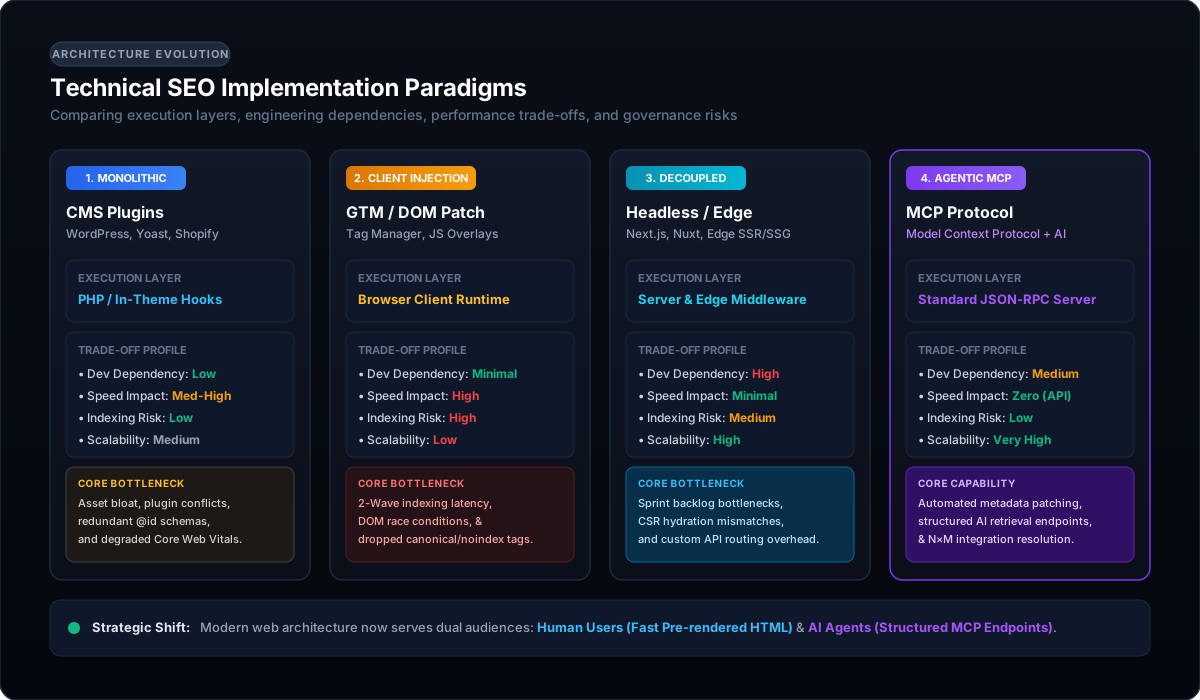
This guide evaluates four modes: monolithic plugins, temporary GTM or DOM injection, headless SEO implementation, and MCP agent interfaces.
The Monolithic CMS: Plugins and Native Capabilities
For most mid-market and enterprise sites, the stack is familiar: WordPress with Yoast, Rank Math, or SEOPress; Shopify with native SEO fields plus app-store add-ons; or a similar monolith where CMS, front end, and rendering engine ship together. These platforms lower the barrier to SEO execution. Marketing teams gain direct control over titles, meta descriptions, canonicals, Open Graph tags, robots directives, and schema without submitting an engineering ticket.
Where Plugins Help and Where They Fail
Plugins excel at predictable, template-level work: XML sitemaps, breadcrumb schema, canonical injection, and basic hreflang. This reduces manual touchpoints and speeds up deployment.
However, plugins introduce fragility. Every plugin adds assets to the critical rendering path, including HTTP requests, database queries, inline scripts, and CSS. When several plugins run concurrently, performance degrades. In client audits, SEO plugins frequently account for a measurable share of JavaScript weight or render-blocking CSS, directly hurting Core Web Vitals and crawl efficiency.
Architectural conflicts create a secondary risk. Plugins operate independently. We regularly find setups where two plugins output conflicting <link rel="canonical"> tags, or where schema plugins generate overlapping @id values that rich-result tools flag as redundant. Resolving these conflicts requires developer time, reintroducing the bottleneck the plugin was intended to bypass.
Plugins are execution accelerators, not architects. They work best when one tool owns the SEO layer, governance rules are explicit, and performance budgets accompany new feature requests.
The Agile Workaround: Tag Manager and DOM Injection
Engineering backlog friction is real. SEO recommendations sit in Jira behind checkout fixes, security patches, and quarterly product features. To bypass the queue, many SEOs turn to Google Tag Manager to inject canonicals, add noindex directives, or rewrite schema blocks dynamically based on triggers.
This approach is fast, reversible, and requires no code deployment.
Pros, Cons, and Rendering Risks
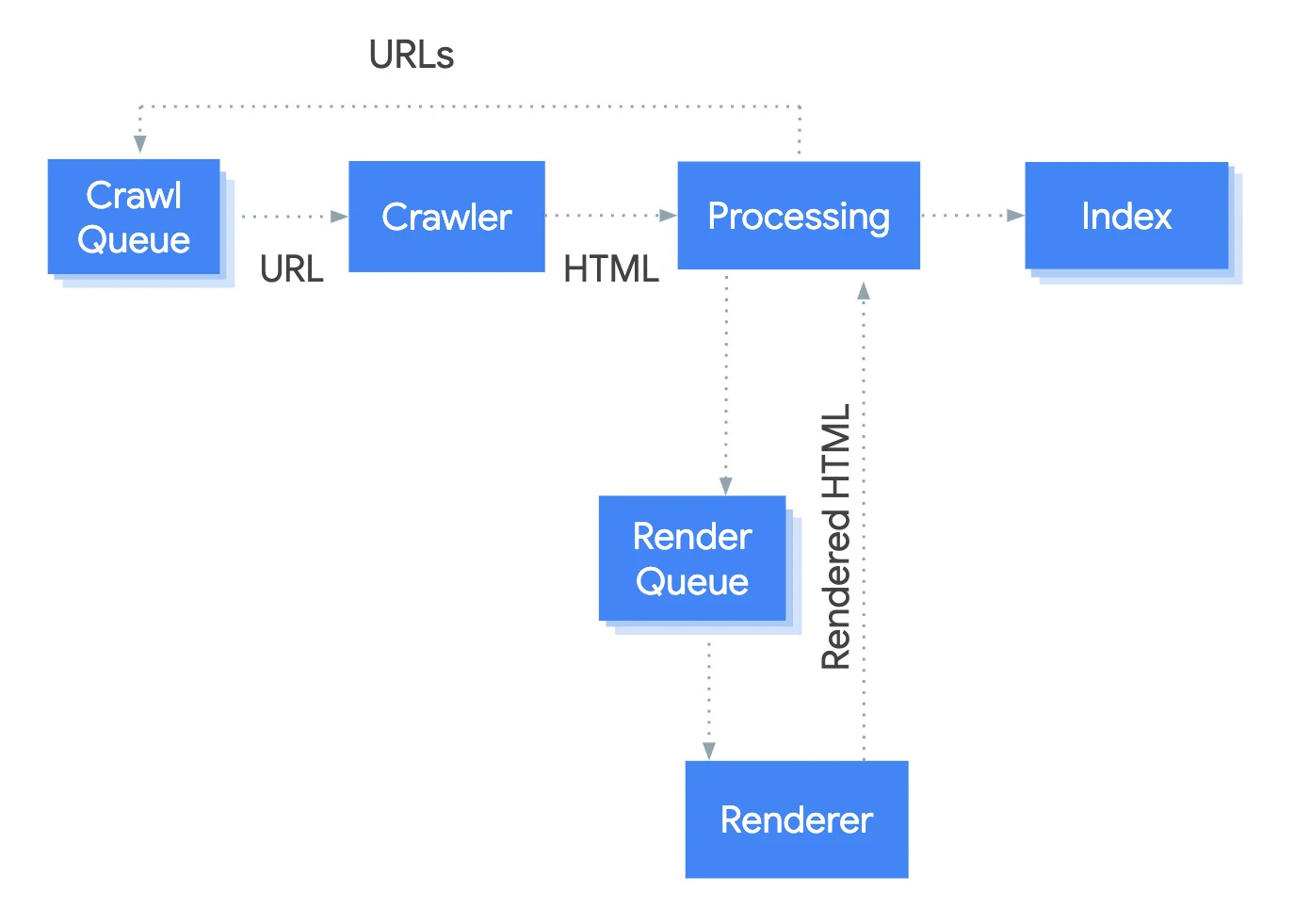
The upside is speed and reduced engineering dependency. A well-governed container can ship metadata adjustments in hours and roll them back with one toggle. The downside is that GTM injection is client-side. Tags execute after the initial HTML arrives, often queued behind consent banners, analytics scripts, and marketing pixels.
That execution delay creates real technical risks:
- Rendering latency: If Googlebot parses the raw HTML before the tag fires, it reads the original metadata. Injected canonicals or noindex directives can be missed entirely.
- Crawl budget pressure: Googlebot renders JavaScript, but compute capacity is finite. Relying on client-side script execution increases processing costs per page and introduces indexing variability.
- Core Web Vitals impact: Every injected script and DOM manipulation adds execution time. Multiple GTM SEO fixes can degrade LCP or INP scores.
- DOM race conditions: Injecting into the
<head>from a body-side script creates execution race conditions that shift across theme updates, third-party tags, and browser engines. - Security and governance: Broad publishing permissions inside GTM allow users to alter indexation directives or inject arbitrary HTML without version control or pull request review.
GTM-based SEO is a band-aid, not an architecture. It works as a short-term bridge during site migrations, emergency patches, or platform freeze periods. It should never serve as the permanent foundation for canonicals, robots directives, or structured data on an organic-search-dependent site. The durable fix is server-side via template updates, edge functions, or headless rendering layers.
Navigating Headless and Decoupled Builds
Headless front ends built on Next.js, Nuxt, SvelteKit, or custom React and Vue configurations are standard for brands that want fast load times, omnichannel publishing, and complete interface control. A headless CMS distributes content across web, mobile, kiosk, and partner feeds from a single source of truth, while modern frameworks can deliver sub-second Core Web Vitals.
For SEO, that architectural freedom introduces engineering overhead.
Technical Complexity and Rendering Modes
In a decoupled stack, standard SEO functionality must be built intentionally. Engineering teams must map meta fields from CMS APIs, generate dynamic route trees, and define redirect rules in edge middleware. SEO becomes a software engineering discipline rather than a CMS setting.
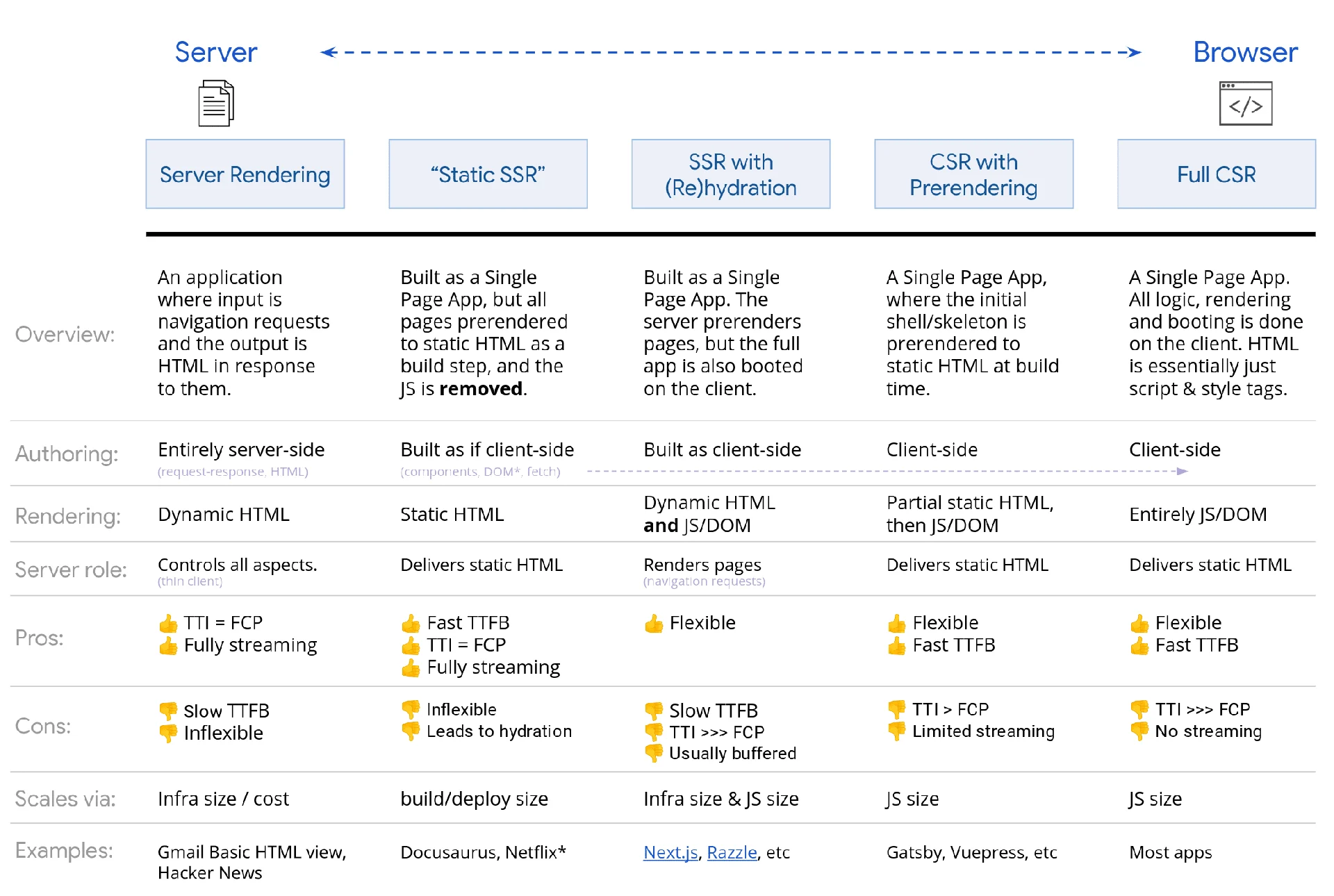
The rendering strategy determines crawl reliability:
- Server-Side Rendering (SSR): Returns fully rendered HTML on every request. This remains the safest and most reliable model for search crawlers.
- Static Site Generation (SSG): Pre-renders pages at build time. Ideal for content that updates infrequently, though dynamic routing, incremental static regeneration (ISR), and cache invalidation require careful maintenance.
- Client-Side Rendering (CSR): Ships an empty HTML shell and hydrates the page in the browser via JavaScript. CSR remains the primary cause of indexing failures. While search engines process JavaScript, rendering queues remain slower, less deterministic, and more expensive for crawl budgets.
Hydration mismatches create further edge cases. Even frameworks configured for SSR or SSG can return an empty shell if state management libraries (such as TanStack Query, Redux, Zustand, or Pinia) fetch content on the client. If data-fetching hooks or loading states are misconfigured, search engines receive an HTML document with empty title tags, missing headings, and no visible body content. We have audited production pages that rendered cleanly in a desktop browser but returned near-blank HTML source to crawlers.
Treat SEO as a first-class engineering requirement from day one: establish explicit rendering decisions, automated HTML snapshot testing, server-side metadata pipelines, and cross-functional QA across SEO and frontend teams. For a deeper diagnostic, see our Technical SEO Audit Guide.
Modern CMS and the Model Context Protocol (MCP)
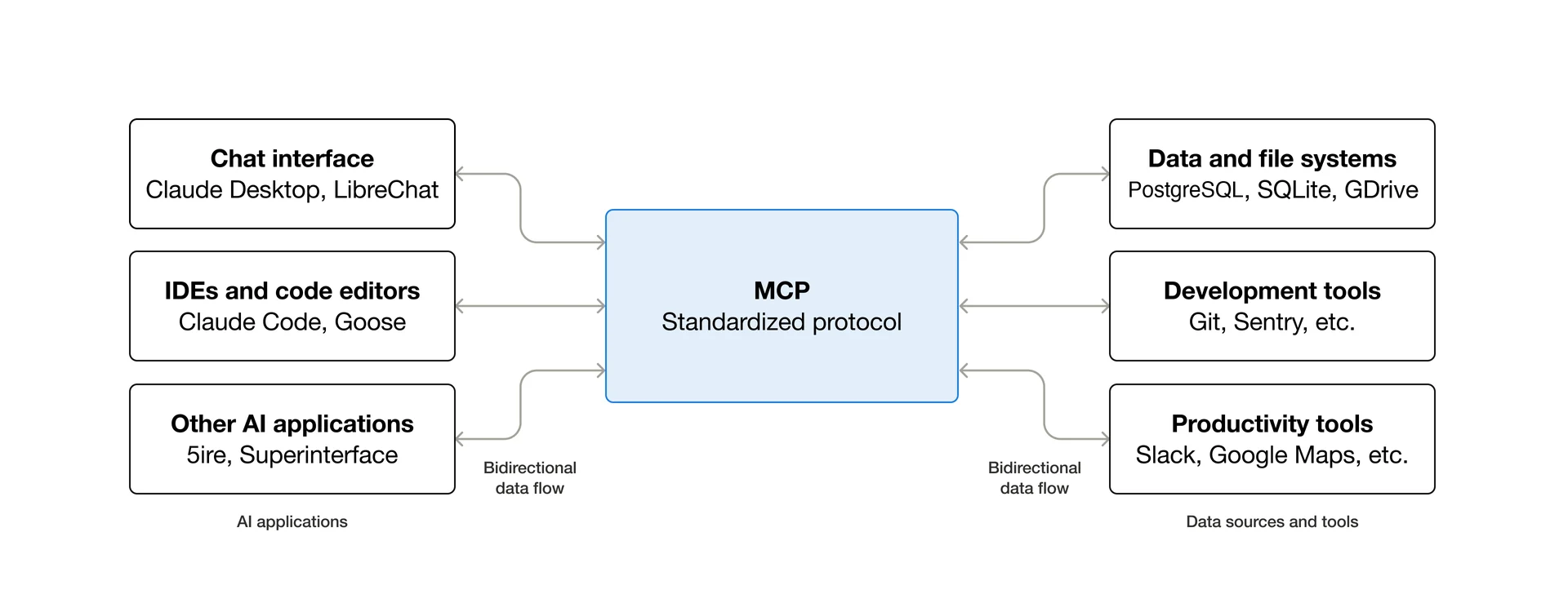
The next shift in technical SEO is the Model Context Protocol (MCP), an open standard that lets AI agents communicate directly with CMS databases, APIs, and content repositories through a uniform interface. Think of MCP as the USB-C of AI: one connector replacing the proprietary adapters previously required to plug models into WordPress, Contentful, Shopify, Strapi, or custom backends.
Solving the Integration Bottleneck
Connecting multiple AI agents across multiple content repositories creates an N×M integration problem. Every tool requires custom middleware, and maintenance compounds with every release. MCP replaces custom integrations with a standard client-server protocol. A CMS exposes an MCP server, allowing compliant agents to inspect data structures, query content, and submit updates directly without bespoke middleware.
With an MCP server in place, an AI agent can execute structured, programmatic SEO tasks at scale:
- Generating structured meta descriptions and missing image alt text
- Patching missing schema markup
- Resolving broken canonical configurations
- Updating hreflang annotations based on live crawl data
This addresses a fundamental shift in search architecture. Websites now serve two distinct audiences: human visitors browsing rendered web pages, and automated retrieval systems querying structured endpoints. MCP makes the CMS a direct participant in that ecosystem, exposing semantically rich endpoints an agent can query, verify, and update deterministically.
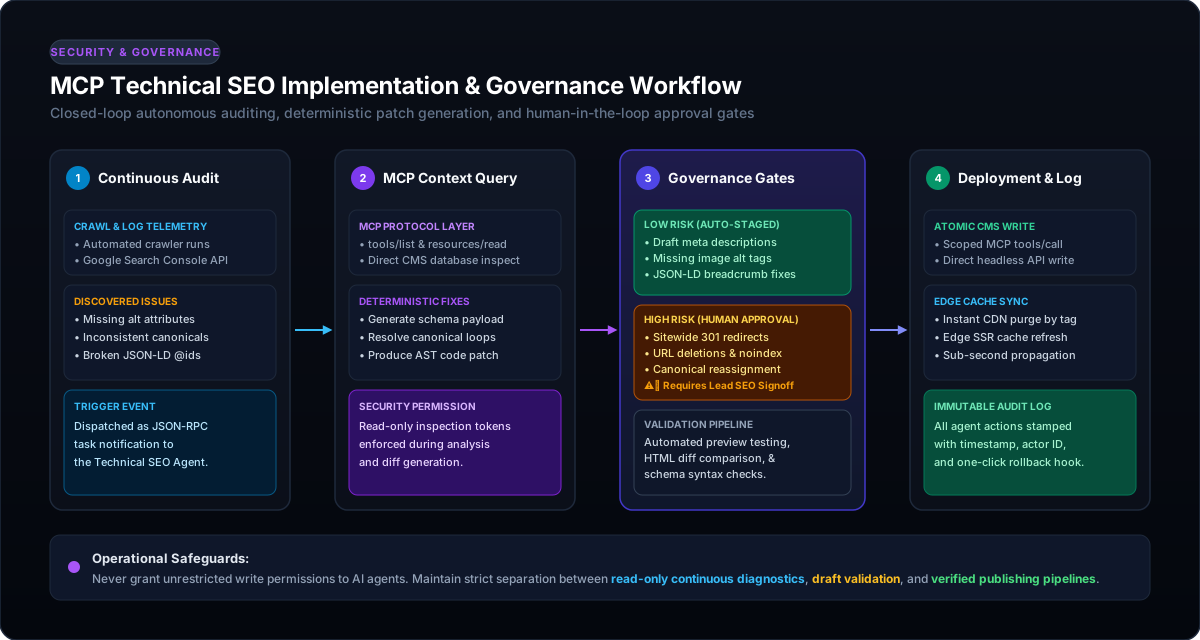
Security and Governance Controls
Programmatic API access requires strict operational boundaries:
- Scoped Permissions: Deploy read-only audits in production. Restrict write access to specific, non-destructive fields such as draft metadata or JSON-LD schema.
- Human-in-the-Loop Verification: Require manual approval for content publishing, URL deletion, or sitewide redirect modifications.
- Staged Rollout: Begin with read-only testing, progress to assisted draft generation with editorial review, and automate low-risk publishing only after thorough testing.
- Key Management and Audit Logging: Store API keys in dedicated secrets managers, never in code repositories, and maintain immutable audit logs for every agent action.
MCP does not replace site architecture, crawlability, or content quality. It provides a structured interface between generative AI tools and the systems powering modern websites.

Choosing the Right Implementation Framework
- Use monolithic CMS plugins when your site runs on WordPress, Drupal, Shopify, or Adobe Commerce; your SEO needs are standard (canonicals, meta tags, XML sitemaps, basic Schema); engineering support is limited; and speed-to-market matters more than custom control.
- Use GTM or DOM injection as a temporary bridge, never a permanent architecture, when you need a stopgap for a migration, hard-coded template change, or platform that blocks server-side access; you can tolerate rendering risk; and you have a clear sunset date.
- Invest in headless SEO implementation when you are separating front end from CMS; your content serves multiple channels (web, app, IoT, partner feeds); performance and Core Web Vitals are business-critical; and you have consistent front-end engineering capacity.
- Consider MCP or AI-agent integration when your organisation already exposes APIs to internal AI agents; you are building retrieval systems that need deterministic, structured access to SEO metadata; or you want to decouple SEO data from presentation so agents can consume it without scraping rendered HTML. Treat it as an additive layer, not a replacement for crawlable web pages.
Implementation Comparison at a Glance
- Monolithic CMS plugins: Low dev dependency. Medium risk. Medium scalability. Medium to high page speed impact from plugin bloat.
- GTM / DOM injection: Low dev dependency. High risk. Low scalability. Medium to high page speed impact from render-blocking JavaScript.
- Headless / bespoke build: High dev dependency. Medium risk. High scalability. Low to medium page speed impact when SSR and SSG are configured correctly.
- MCP + AI-agent layer: Medium to high dev dependency. Medium risk. Very high scalability. Low page speed impact because it operates at the API and CMS layer.
Frequently Asked Questions
Is it safe to inject Schema markup via Google Tag Manager?
It is possible, but not our recommended default. Google can process JavaScript-injected structured data, but execution is not guaranteed. If the tag fires after the crawler parses the initial page, rich-result eligibility is lost. Use server-side or template-level Schema wherever possible.
Why does headless SEO require a larger developer budget?
Headless architectures remove standard CMS guardrails. Every SEO requirement (canonical logic, hreflang, Open Graph tags, structured data, sitemap generation, and redirect handling) must be specified, built, tested, and maintained by engineers. SEO becomes an ongoing software requirement rather than a one-time configuration task.
What is the Model Context Protocol in SEO?
MCP is an open standard that allows AI agents to query contextual information from a system in a structured format. An agent can request canonical URLs, target keywords, on-page entities, or the latest audit status from a CMS without scraping HTML. MCP does not replace search crawlers, but it provides structured access for internal agents and retrieval systems.
How do plugins impact Core Web Vitals?
Plugins add scripts, stylesheets, database queries, and render-blocking assets. A bloated plugin can degrade Largest Contentful Paint, Total Blocking Time, and Cumulative Layout Shift. Audit plugin load order, defer non-critical assets, and eliminate redundant plugins. For ongoing performance tuning, see our Core Web Vitals Optimisation service.
There is no single correct implementation path. The right choice balances ranking risk, engineering budget, and time-to-market for your stack. Websites must now serve both human searchers and automated retrieval systems. Building frameworks that support both turns technical implementation from a bottleneck into a competitive advantage.